
 EN
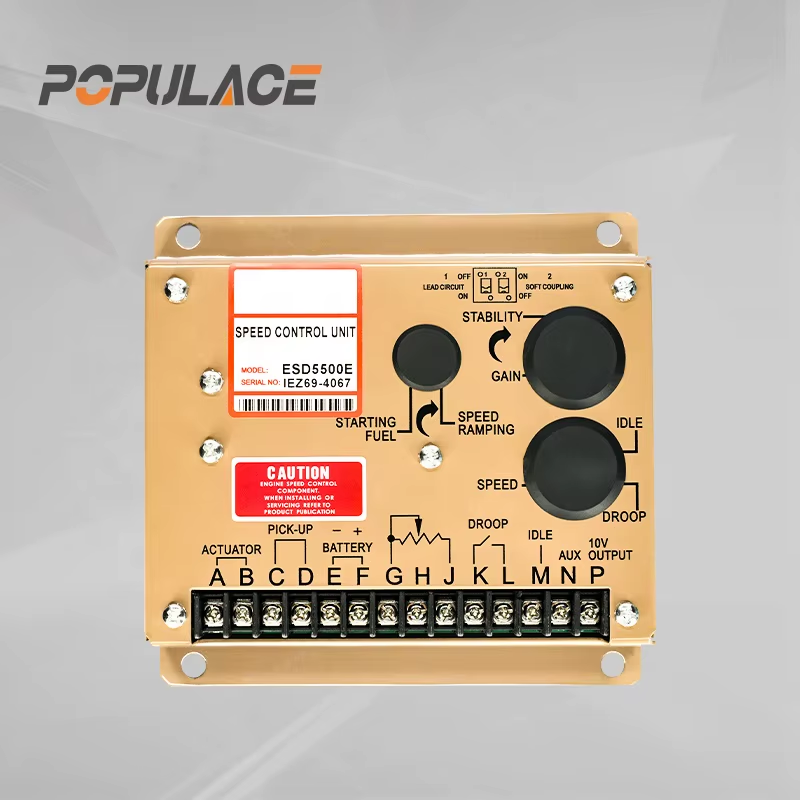
How to Import ESD5500E Electronic Speed Governors for Diesel Gensets?
Importing an ESD5500E controller is not simply a matter of finding a low unit price and booking freight. This electronic speed governor sits between the engine’s speed-sensing and actuation functions, so a mismatch can turn an otherwise routine replacement into a commissioning delay. For distributors, service companies, and genset assemblers, the practical objective is to verify compatibility before payment, protect the shipment in transit, and hand the installer a traceable technical pack.
From a procurement standpoint, an ESD5500E order should balance unit price, lead time, documentation quality, and supplier responsiveness. Most buyers begin with price—well, price is the starting point—but the expensive mistake is receiving an ESD5500E governor that cannot be safely matched to the installed actuator, magnetic pickup, or DC supply. The checklist below helps keep the technical and import steps in the right order.
1. Confirm what the ESD5500E must replace
Begin with the controller already on the generator, the engine model, and the genset application. An electronic speed governor ESD5500E is normally selected as part of a control loop: it reads a speed signal, compares that signal with the commanded speed, and drives a proportional actuator. Search results for the series describe isochronous, droop, and variable-speed operation, but the operating mode alone does not prove interchangeability.
Ask the end user or maintenance team for clear photos of the nameplate, terminal markings, adjustment labels, connector condition, and the existing ESD5500E wiring. Also record whether the set is for standby duty, prime power, parallel operation, or a variable-speed application. A controller that seems identical in a catalog can have a different revision, harness arrangement, or adjustment requirement in the field.
- Capture the exact controller marking and revision, not only the phrase “ESD5500E.”
- Identify the engine, actuator part number, magnetic pickup arrangement, and nominal DC supply.
- State the required governing mode and whether the genset shares load with another set.
- Request the existing wiring diagram and any prior troubleshooting notes.
2. Verify electrical interfaces before you place an order
The specification review is the most valuable part of importing an ESD5500E. The controller must suit the speed sensor signal, actuator characteristics, supply voltage, and control philosophy of the actual engine. One search-result listing describes a 12 or 24 Vdc configuration and a 1000–7500 Hz frequency range; treat figures like these as items to verify against the supplier’s current datasheet and the purchased unit, not as a substitute for that verification.
For ESD5500E wiring, obtain the manufacturer’s terminal diagram with the quotation. Manual search results also indicate that shielded cable may be called for on external controller connections and give a speed-sensor resistance guidance of 30–1200 ohms. Those details are useful screening questions, but a qualified installer should confirm the exact manual revision, grounding practice, cable route, and electrical safety requirements for the jobsite.
| Check before purchase | Why it matters | Evidence to request |
|---|---|---|
| Part marking and revision | Prevents substitution by a look-alike controller | Nameplate photo and datasheet |
| DC supply and actuator interface | Protects correct controller-to-actuator matching | Terminal diagram and actuator details |
| Speed-sensor arrangement | Avoids unstable speed feedback or no start | Magnetic pickup specification and wiring drawing |
| Governing mode | Aligns operation with standalone or parallel genset use | Application statement and adjustment guidance |
| Harness and terminal condition | Helps plan installation labor and replacement parts | Photos, packing list, and inspection notes |
3. Handle “Cummins ESD5500E” requests carefully
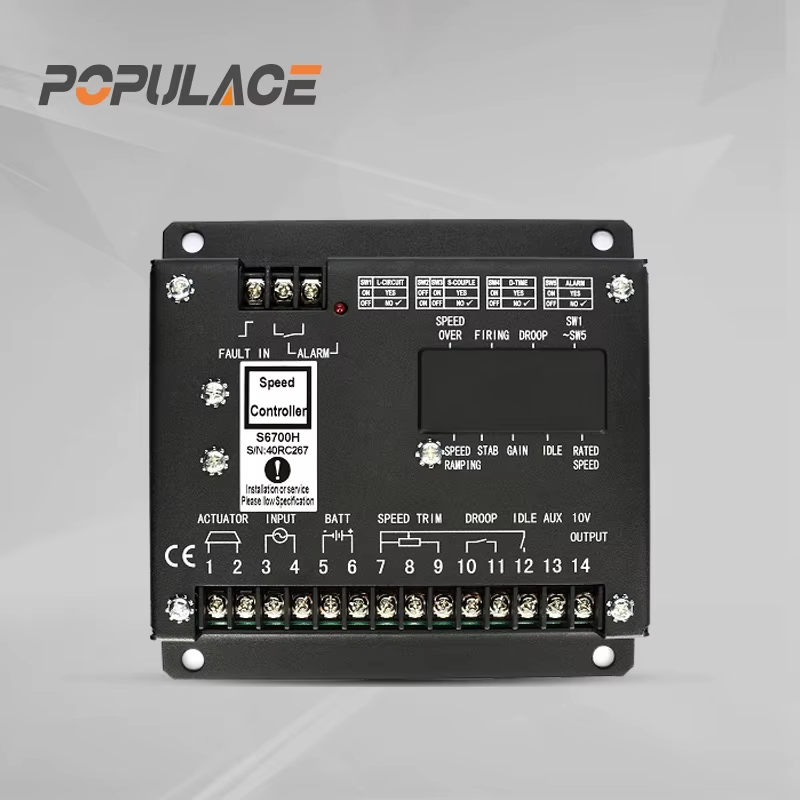
A request described as Cummins ESD5500E often means the buyer has a Cummins-powered genset, not that every controller carrying the ESD5500E designation is factory-approved for every Cummins engine. Do not convert that shorthand into a compatibility claim. Instead, ask for the engine model, governor linkage or actuator reference, current controller label, and the original wiring diagram. This separates a genuine direct-replacement requirement from a retrofit project that needs engineering review.
The pitfall that gets overlooked with an ESD5500E governor is not the front-panel adjustment knobs; it is the interface between the speed signal and the engine’s actuator system. In many field installations, poor shielding, damaged connectors, vibration, or an unsuitable mounting location can limit controller performance even when the replacement ESD5500E itself is correct.
4. Put technical evidence into the purchase order
Your PO should do more than list quantity and price. Describe the exact ESD5500E marking requested, the approved technical documents, packing requirements, inspection photos, and the rule for substitutions. Require the supplier to notify you before shipping if the label, enclosure, terminal layout, or supplied documentation differs from the approved reference.
For wholesale orders, request a pre-shipment package containing the commercial invoice, packing list, country-of-origin information where applicable, product photos, carton dimensions and weights, and the ESD5500E terminal or user documentation. These records help the customs broker classify the goods correctly and help the receiving team confirm that the shipped controller is the item reviewed during procurement.
5. Plan import, freight, and receiving controls
Electronic controllers need protection from moisture, impact, and electrostatic damage during the logistics chain. Specify individual protective packing, clear carton identification, and a packing list that lets receiving staff reconcile serial or lot markings where available. For urgent maintenance orders, compare courier and air-freight lead times against the cost of a genset outage. For stock replenishment, consolidate compatible parts only after confirming that the packaging prevents movement and crushing.
Before shipment, give your customs broker a plain product description such as “electronic engine speed control unit for diesel generator set,” plus the verified invoice value, quantity, origin, and applicable technical documentation. The broker, not the supplier’s marketing label, should advise on the destination-country tariff classification, import permits, tax treatment, and declaration requirements.
6. Inspect before installation and commission with a qualified technician
At receiving, compare the carton label, controller marking, quantity, and terminal layout with the approved ESD5500E documentation. Photograph discrepancies before the item is installed. Do not power an unfamiliar controller merely to “see if it works.” A technician should inspect the actuator circuit, speed pickup, battery supply, grounding, and wiring integrity before connecting the new electronic speed governor ESD5500E.
During commissioning, follow the supplied manual and site procedures. Confirm stable idle and rated-speed behavior, observe response under controlled load changes, and document any adjustment made. Do not copy another genset’s knob positions blindly: engine condition, actuator travel, sensor signal, and load profile can differ. Keep the final ESD5500E wiring record with the maintenance file so the next replacement does not start from scratch.
Import checklist for an ESD5500E order
- Match the ESD5500E marking, revision, engine, actuator, and sensor system.
- Approve the terminal diagram and technical documentation before payment.
- Clarify whether a Cummins ESD5500E request is a direct replacement or a retrofit.
- Put substitution control, inspection photos, packing, and document requirements into the PO.
- Use a customs broker for destination-specific classification and compliance advice.
- Inspect the shipment, then have qualified personnel complete ESD5500E wiring and commissioning.
A disciplined import process protects more than the purchase price. It gives the buyer a clearer compatibility decision, a cleaner customs file, and a safer path from delivery to a working diesel genset.






